I Pack for Everything — and Somehow Arrive Prepared for Nothing
Why I bring so much, still don’t like my outfits, and always end up shopping when I get there
There are different kinds of travelers.
I have a couple of friends who can travel with a carry-on the size of a shoebox and somehow manage to have stylish outfits for every moment. They always look appropriate. They never seem to be missing anything essential.
They also never ask to borrow something from me.
I admire them deeply.
I do not have their gift.
I am what you might call an optimistic overpacker.
The Optimistic Overpacker
I pack for a wide range of possibilities.
Weather changes — because I hate being cold.
Shoes — because comfort and style don’t always agree.
Outfits for dinners that may or may not happen.
Gym clothes for intentions that rarely materialize.
I pack for imagined scenarios that sound reasonable at home and quietly disappear once I arrive.
My suitcase is full of good intentions.
I don’t overpack because I like variety.
I overpack because I want to be prepared.
Prepared to feel comfortable and appropriate.
Prepared for a dinner with the royal family, should the opportunity arise.
And yet, despite preparing for everything, I almost never feel prepared for where I actually land.
I go over the weight limit. I lug a large bag around. And within a very short time of arriving, I find myself doing something I hadn’t planned on at all.
I shop.
What I’m Actually Trying to Do
I’m not trying to pack outfits.
I’m trying to pack readiness.
I want to feel comfortable, appropriate, and quietly confident — ideally with less baggage, literally.
So after years of overpacking, I’ve started trying something different.
Instead of packing for every possible version of the trip, I pack starting points.
Outfits I trust.
Things that work — unless I’m landing in Munich during Oktoberfest and need a dirndl.
The Starting-Point Approach (What I’m Learning)
This is still a work in progress. But a few things have helped.
1. I Build Around a Travel-Day Anchor
I start with one outfit that works across conditions: cold departure, chilly plane, warm arrival.
If something doesn’t work with that outfit, it usually doesn’t come.
This one decision eliminates a surprising amount of overthinking.
2. I Choose Comfort First — Then Elevate
Comfort isn’t optional for me; it’s foundational. But comfort doesn’t have to mean sloppy.
I look for pieces that feel easy and polished — shoes I can walk in, layers that adjust, colors that mix and match, and fabrics that don’t fight back.
3. I Allow for Discovery
I no longer try to be prepared for every possible invitation — including, yes, an unexpected dinner with the royal family.
I leave a little space in my bag now. And in my expectations.
If I end up buying something when I arrive, I consider it a souvenir — one that helps me feel more a part of the place. I also have room to bring it home.
What I Know for Sure
I still overpack sometimes.
But I’m learning to let go of control — and the need to be prepared for everything — in favor of curiosity.
Because being ready for everything isn’t the same as being ready for anything.
And that difference has made traveling feel lighter — even when the suitcase isn’t.
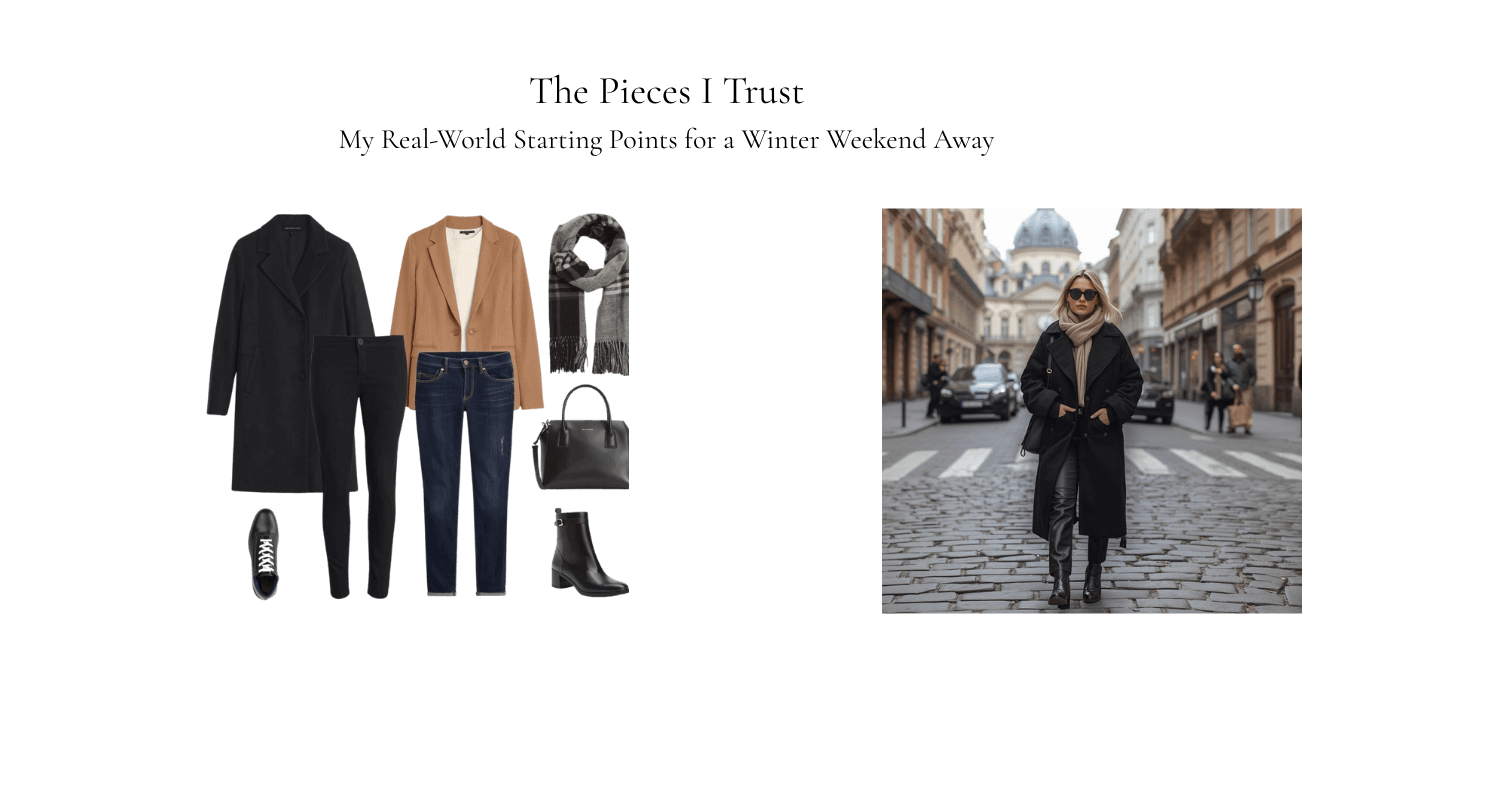
The Pieces I Trust (My Real-World Starting Points)
These aren’t rules. They’re anchors.
A great blazer — polished enough for dinner, relaxed enough for travel.
Black pants and straight-leg or cropped jeans — reliable, unfussy, and adaptable.
Comfortable, polished walking shoes — because nothing ruins a city faster than sore feet.
Cold or warm destinations will change what goes into the bag. The specifics shift. The philosophy doesn’t: travel lighter, with a few things you trust.