
Why You’re Always Hungry in Midlife
And How Protein Changes Everything
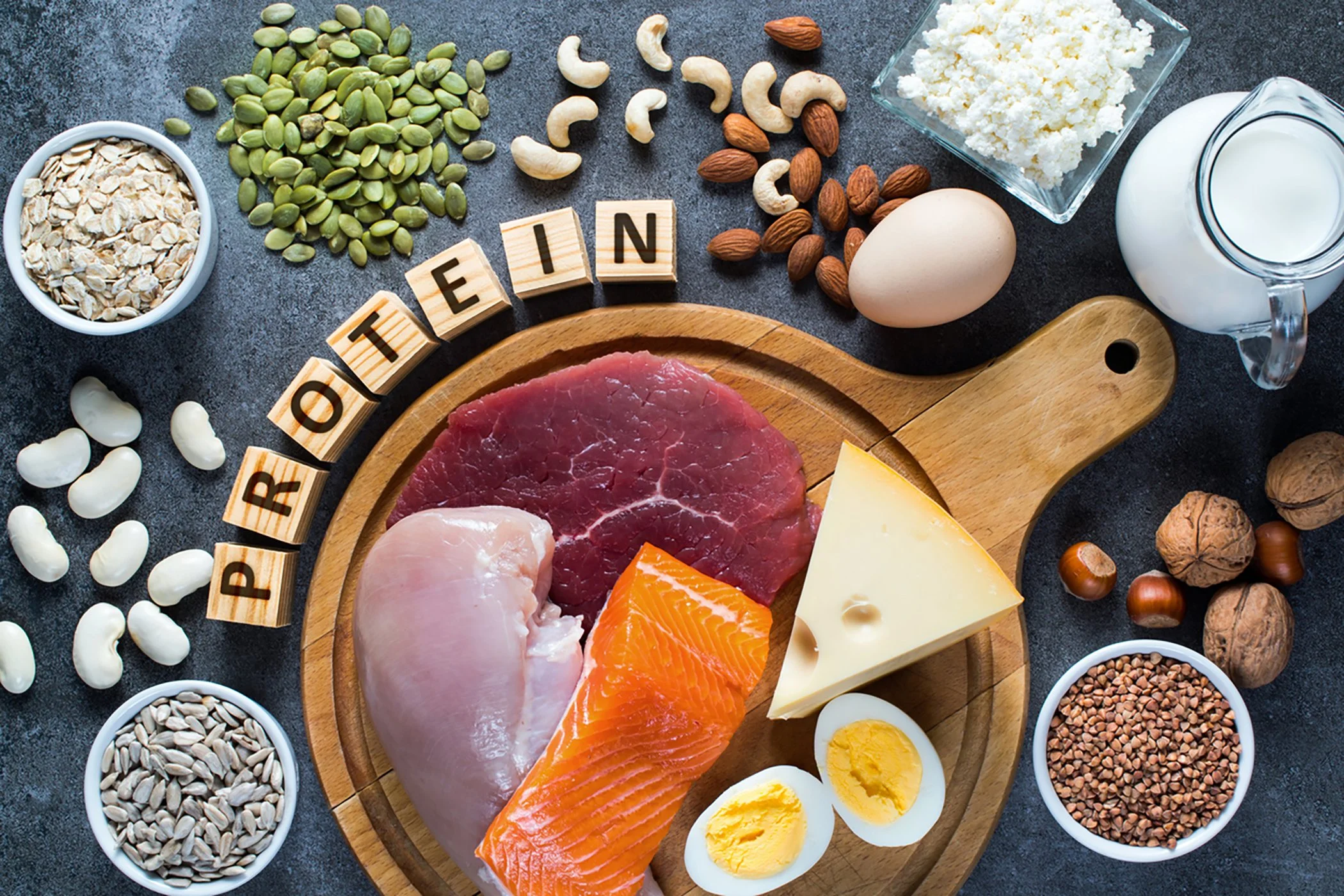
If you feel like your hunger has gotten louder in midlife, you’re not imagining it — and it’s not a character flaw.
Many women notice this change during perimenopause and menopause, when hormonal shifts affect metabolism, blood sugar, and appetite regulation.
For many women, you’re eating less than you used to. You’re trying to be “good” — lighter breakfasts, fewer calories, more clean foods. And yet you’re hungry again an hour later — or you feel like you’re always hungry, no matter how carefully you eat. By mid-afternoon you’re reaching for carbs or something quick for energy, and by evening it can feel like you’ve spent the entire day negotiating with food.
That pattern is rarely about willpower. It’s often a physiological chain reaction:
Once you understand the cycle, the experience makes sense — and the solution becomes much simple.
Early Workout or Not Quite Hungry First Thing in the Morning?
You Don’t Have to Eat 30g All at Once
If you wake up early, the idea of eating 30 grams of protein right away may feel unrealistic.
You don’t have to get it all in at once.
Before your workout: 10–15g of protein
After your workout: Finish your breakfast and bring your total to 25–35g
Getting some protein before exercise helps buffer your morning cortisol rise and protects muscle. Finishing the rest afterward supports recovery, stabilizes blood sugar, and helps prevent cravings later in the day.
Five breakfasts that reliably hit the threshold
If 30 grams sounds like a lot of protein, you’re not alone. Many women find it difficult to reach the amount needed to stay full and reduce cravings.
These options provide roughly 30 grams of protein, enough to support blood sugar stability and appetite control.
1. Protein smoothie
Protein powder (25g)
Milk, almond milk, or goat milk (~8g)
Handful of berries
Total: ~30–33g
2. Cottage cheese bowl
1 cup cottage cheese (~28g)
Nuts or seeds
Total: ~30–34g
3. Smoked salmon plate
4 oz smoked salmon (~23g)
Cottage cheese or Greek yogurt (~10g)
Total: ~33–37g
4. Leftovers breakfast bowl
4 oz chicken, turkey, beef, or shrimp
Total: ~30–35g
5. Protein oatmeal
½ cup oats (~5g)
Protein powder (25g)
Total: ~30g
Why protein changes your whole day
Protein doesn’t just help you feel full. It changes what your body does next.
Higher-protein meals slow digestion, stabilize blood sugar, and activate the body’s natural satiety signals. Research consistently shows that higher-protein breakfasts improve fullness and reduce later cravings compared with lower-protein meals.
When protein intake is too low, carbohydrates — even healthy ones — are absorbed more quickly. Blood sugar rises faster and falls sooner.
That drop is what often triggers the energy dips and cravings that follow.
For many women in midlife, a higher-protein breakfast is one of the most effective ways to stabilize blood sugar and reduce cravings during menopause.
What’s happening behind the scenes
Here’s what’s often happening.
Low-protein or high-carbohydrate breakfasts cause blood sugar to rise quickly. When that rise is followed by a drop, your body responds by releasing cortisol to keep your brain supplied with energy.
Cortisol, in turn, increases appetite and shifts your cravings toward quick-energy foods like sugar, refined carbs, and salty snacks.
Those foods create another rapid rise and fall in blood sugar — and the cycle begins again.
Low protein → blood sugar spike → drop → cortisol rise → cravings → another spike
By the end of the day, it can feel like you’ve been chasing energy on a roller coaster.
Why hunger and cravings increase during perimenopause & menopause
During perimenopause and menopause, several metabolic changes occur:
✻ Insulin sensitivity declines
✻ Muscle mass gradually decreases
✻ Body composition shifts toward greater fat storage
Because muscle helps regulate blood sugar, these changes make glucose levels less forgiving. The same breakfast that once kept you satisfied may now leave you hungry much sooner.
At the same time, the stress response becomes more reactive. Even small drops in blood sugar can trigger a stronger cortisol response — which is why many women experience increased hunger and stronger cravings during menopause.
For many women, nothing changed about their discipline.
What changed was their physiology.

How much protein you actually need at breakfast
Here’s the part that surprises many women.
A little protein helps. But there’s a level where your body actually registers that you’ve been properly fed.
For most midlife women, that threshold is:
About 25–30 grams of high-quality protein per meal
Below that level:
✻ Hunger hormones remain active
✻ Blood sugar is less stable
✻ Cravings tend to return within a few hours
At or above that level:
✻ Digestion slows
✻ Blood sugar rises more gradually
✻ Satiety signals increase
✻ Energy stays steady for longer
This is why many “healthy” breakfasts — a small yogurt, oatmeal, toast with nut butter, or a fruit-heavy smoothie — don’t keep you full. Most provide only 10–18 grams of protein, which falls below the threshold.
Breakfast habits that increase hunger and cravings
Many common breakfast habits feel healthy but keep protein intake too low to stabilize appetite.
1. The “light and healthy” breakfast
Fruit, toast, oatmeal, or smoothies made with juice typically provide less than 15g of protein. Blood sugar rises quickly and drops soon after.
2. The coffee-only morning
Caffeine suppresses appetite temporarily but raises cortisol. Hunger often returns later in the morning, stronger and more urgent.
3. The “protein — but not enough” breakfast
One egg, a small yogurt, a protein bar, or half a scoop of protein powder usually provides 10–18g of protein — enough to feel responsible, but not enough to keep hunger at bay.

Coffee First? Here’s Why Protein Should Come Before (or With) It
If you reach for coffee the moment you wake up, you’re not alone. But in perimenopause and menopause, coffee on an empty stomach can quietly set up the energy and craving swings many women struggle with later in the day.
When you wake up, your body naturally releases cortisol to help you feel alert. Caffeine stimulates cortisol even more. Without any food — especially protein — that extra stimulation can amplify your stress response and make blood sugar less stable.
The result often shows up a few hours later:
✻ Mid-morning hunger
✻ Energy dips
✻ Stronger cravings for quick carbs or sugar
The fix doesn’t require a full breakfast right away. Even a small amount of protein helps steady your system.
Try one of these before or with your coffee:
✻ Half a protein shake
✻ Protein powder mixed with milk
✻ A few bites of cottage cheese or Greek yogurt
✻ A smoothie with 10–15g of protein
Then finish your full breakfast later if needed.
In midlife, coffee isn’t the problem.
Coffee without protein is.
The takeaway
Cravings are often not a willpower problem. They’re a stability problem.
When protein intake is too low early in the day, blood sugar becomes less steady. Each drop triggers a small stress response. Over time, that pattern increases hunger, drives carb cravings, and makes energy feel unpredictable.
In midlife, hunger is often a cortisol story —
and cortisol is often a blood sugar story.
A protein-forward morning is one of the simplest ways to interrupt the cycle — helping energy stay steady, hunger stay manageable, and food choices feel easier throughout the day.
